 Here is another challenging problem from the Polish Mathematical Olympiads. Its generality will cause more thought than for a simpler, specific problem.
“A cyclist sets off from point O and rides with constant velocity v along a rectilinear highway. A messenger, who is at a distance a from point O and at a distance b from the highway, wants to deliver a letter to the cyclist. What is the minimum velocity with which the messenger should run in order to attain his objective?”
See the Tired Messenger Problem
(Update 1/29/2025) Dan Steinitz Solution
Dan Steinitz from Israel has sent an elegant solution that only involves vectors and geometry without calculus. I have edited slightly his email and added excerpts from his whiteboard solution, though without the Hebrew annotations, which unfortunately I cannot read. But that is the glory of the universal language of mathematics: it can be read and understood in any language.
See Dan Steinitz Solution.

 A recent video by Angela Collier about compound interest reminded me of an effort I did years ago to derive the formulas for interest calculations, especially for installment payments on a loan like a mortgage. In the process I showed where Euler’s constant e can show up. I thought I would resurrect the material, even though I imagine modern texts now provide the information (I couldn’t easily locate it back then).
 This is another challenging sum from the 2024 Math Calendar.
 ”
” Here is another
 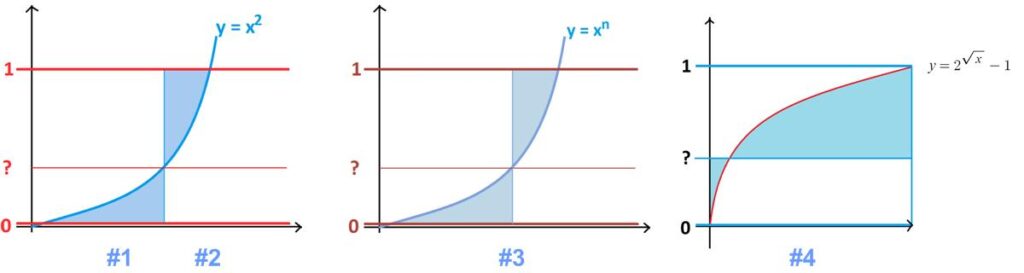 A while ago James Tanton provided a series of puzzles:
 Here is a fairly computationally challenging 1994 AIME problem .
 Well, I discovered that the 2024 Math Calendar has some interesting problems, so I guess things will limp along for a while. This is a challenging but imaginative problem from the calendar.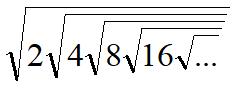
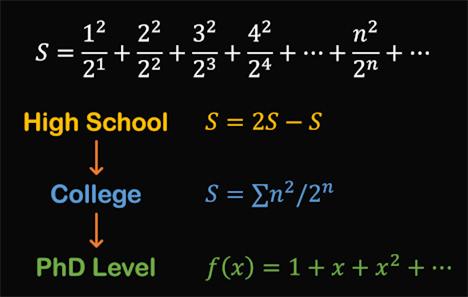 This is yet another series offered by
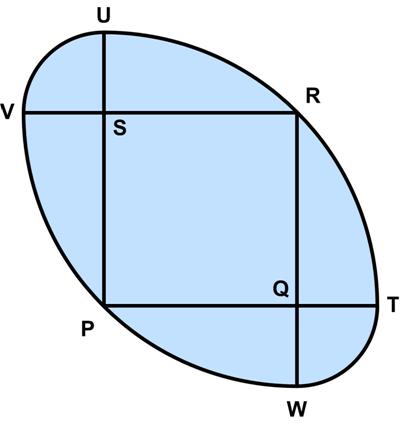 Here is another UKMT Senior Challenge problem for 2017.
 This is a most surprising and amazing identity from the 1965 Polish Mathematical Olympiads.


