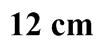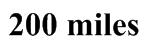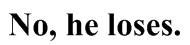
Here are two puzzles from Alex Bellos’s Monday puzzles.
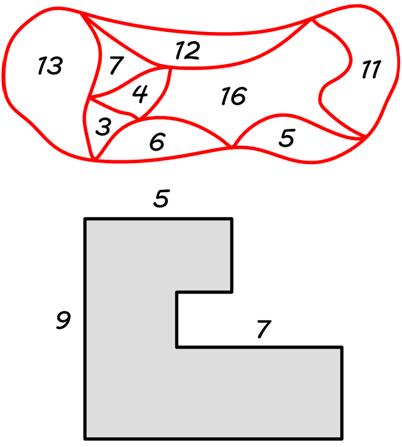
“Ring it. Each region has a perimeter given by its enclosed number. What is the length just along the edge of the entire figure?
Round the block. Assuming all corners are right angles, what is the perimeter?
Today’s puzzles all come from … the Hyde Park Math Zine! This delightful publication is written in pen on a single folded sheet of paper, has a print run of 30 copies, and is distributed in the neighbourhood of Hyde Park in Austin, Texas.
Fanzine culture is well established in sports and music. Math educator Kevin Gately thought the format would work for puzzles too. “It dawned on me that there might be people in my community who find the novelty of a hyper-local math zine to be amusing and/or curious,” he said. And it seems there are.
Each issue of HPMZ presents three problems, with easily understandable answers, and let’s not forget the cover artwork! Gately’s puzzles are mostly taken from other sources, and tweaked. Here are [two] that took my fancy.”
Answer 1 ________ Answer 2
See A Pair of Pretty Perimeter Puzzles for solutions.

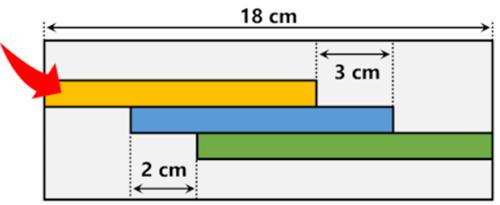 This is a cute little problem from Presh Talwalkar.
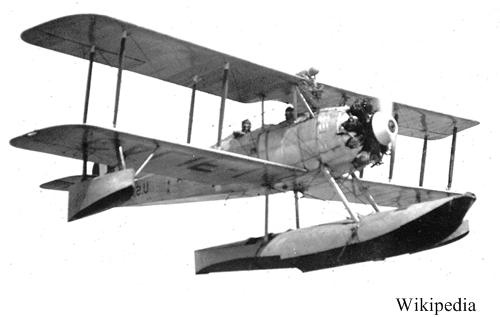 This is a puzzle from Boris Kordemsky’s 1972 Moscow Puzzles.
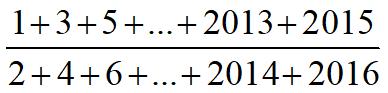 This is a straight-forward
  This is a problem from the 2001 American Invitational Mathematics Exam (AIME).
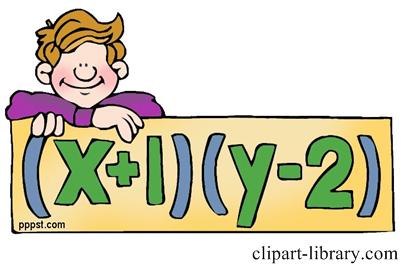 This is a
  This is a simple
  This is a puzzle from Boris Kordemsky’s 1972 Moscow Puzzles.
 Here are two problems involving those pesky radicals from the 2025 Math Calendar.

 This is a brainteaser by S. Ageyev from the November-December 1991 issue of Quantum given in