
 This 2007 four-star problem from Colin Hughes at Maths Challenge is definitely a bit challenging.
“Problem
For any positive integer, k, let Sk = {x1, x2, … , xn} be the set of [non-negative] real numbers for which x1 + x2 + … + xn = k and P = x1 x2 … xn is maximised. For example, when k = 10, the set {2, 3, 5} would give P = 30 and the set {2.2, 2.4, 2.5, 2.9} would give P = 38.25. In fact, S10 = {2.5, 2.5, 2.5, 2.5}, for which P = 39.0625.
Prove that P is maximised when all the elements of S are equal in value and rational.”
I took a different approach from Maths Challenge, but for me, it did not rely on remembering a somewhat obscure formula. (I don’t remember formulas well at my age—only procedures, processes, or proofs, which is ironic, since at a younger age it was just the opposite.) It is also clear from the Maths Challenge solution that the numbers were assumed to be non-negative.
See Maximum Product.
 This statement showed up recently at
  This is a delightful little problem from Dick Hess that exercises one’s basic facility with logarithms:

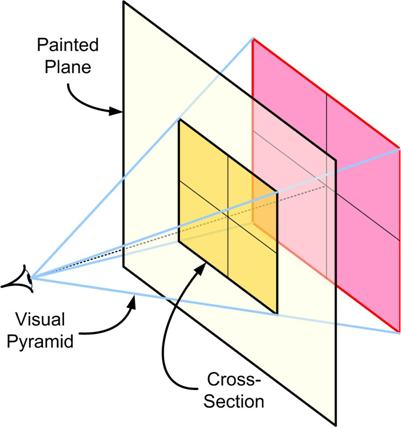 I was reading yet another book on the Scientific Revolution when I came across a discussion of the mathematical significance of the invention of perspective for painting in the 15th century Italian Renaissance. The main player in the saga was Leon Battista Alberti (1404 – 1472) and his tome De Pictura (On Painting) (1435-6), which contained the first mathematical presentation of perspective. Even though mathematics was advertised, it was not at the level of trigonometry I used in my post “

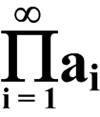 This is a challenging problem from Mathematical Quickies (1967).
 ”
”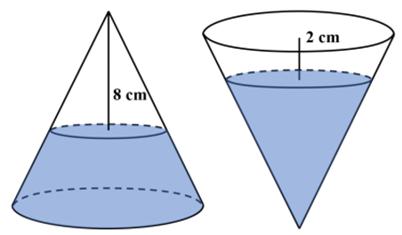 I was astonished that this problem was suitable for 8th graders. First of all the formula for the volume of a cone is one of the least-remembered of formulas, and I certainly never remember it. So my only viable approach was calculus, which is probably not a suitable solution for an 8th grader.
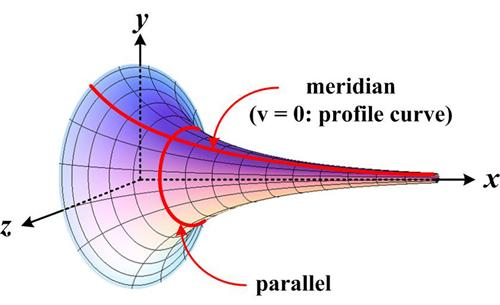 This essay began as an effort to prove Tanya Khovanova’s statement in her article “The Annoyance of Hyperbolic Surfaces” that her crocheted hyperbolic surface had constant (negative) curvature. I discussed Khovanova’s article in my previous essay “
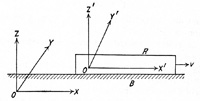 Over the years one of the subjects I return to periodically to study is Einstein’s Theory of Relativity, both the Special and General theories. Interest in the Special Theory focused on the derivation of the Lorentz transformations (or contractions). Why did objects appear with different lengths and clocks run at different speeds for observers moving relative to one another? Early on (late 60s) I came across a great explanation in the 1923 book by C. P. Steinmetz. He derived it from two general assumptions of special relativity: (1) that all motion is relative, the motion of the railway train relative to the track being the same as the motion of the track relative to the train, and (2) that the laws of nature, and thus the velocity of light, are the same everywhere. I did not follow his derivation completely, so I produced my own, which I will give here. See the


