
 This is a problem from the 2001 American Invitational Mathematics Exam (AIME).
“Each of the 2000 students at a high school studies either Spanish or French, and some study both. The number who study Spanish is between 80 percent and 85 percent of the school population, and the number who study French is between 30 percent and 40 percent. Let m be the smallest number of students who could study both languages, and let M be the largest number of students who could study both languages. Find M – m.”
See Language Students Problem for a solution.
 This is a problem from the 1995 AIME problems.
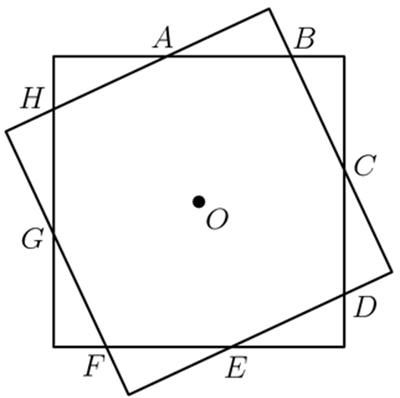 This is a fairly straight-forward problem from the 1999 AIME problems.
 This is a clever puzzle from the 1986 AIME problems.
 Here is a fairly computationally challenging 1994 AIME problem .
 This is a somewhat challenging problem from the 1997 American Invitational Mathematics Exam (AIME).
 This is a problem from the 1987 American Invitational Mathematics Exam (AIME).
 This is an initially mind-boggling problem from the 1995 American Invitational Mathematics Exam (AIME).
 ”
” This is a fun problem from the 1989 American Invitational Mathematics Exam (AIME).
 This is a slightly challenging problem from the 1993 American Invitational Mathematics Exam (AIME).


