
 This problem from the 1987 Discover magazine’s Brain Bogglers by Michael Stueben apparently traces back to 1770, though the exact reference is not given.
“Here’s an arithmetic problem taken from a textbook published in Germany in 1770. Three people are gambling. In the first game, Player A loses to each of the others as much money as each of them had when the game started. In the next game, B loses to each of the others as much money as each had when that game began. In the third game, A and B each win from C as much money as each had at the start of that game. The players now find that each has the same sum, 24 guineas. How much money did each have when play began?”
See the 1770 Card Game Problem for solutions.
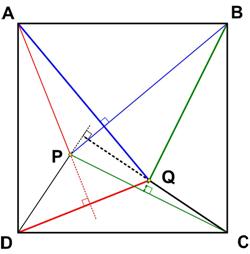 I found this problem from the Math Challenges section of the 2002 Pi in the Sky Canadian math magazine for high school students to be truly astonishing.
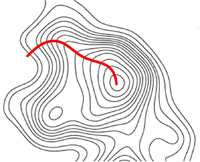 This 2005 four-star problem from Colin Hughes at Maths Challenge is also a bit challenging.
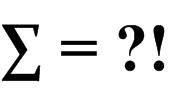 This is another stimulating math problem from Colin Hughes’s Maths Challenge website (mathschallenge.net).
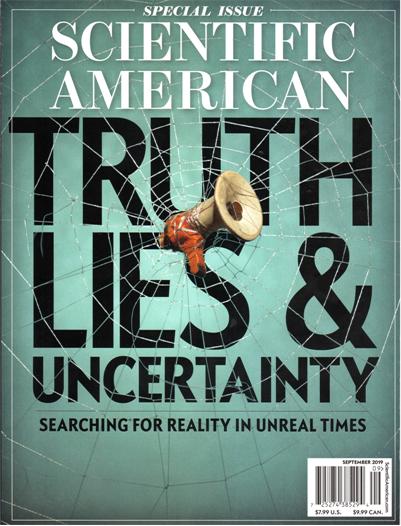 The September 2019 Special Issue of Scientific American is a must read. Unfortunately it is behind a paywall, so you should purchase a copy at a store or digitally online. All the articles are fascinating and relevant, and address basic questions of epistemology—how do we know what we know? The first section, “Truth”, is the most pertinent to my thinking, as it covers three subjects I have been pondering for years.
 Here is yet another surprising result from Colin Hughes at Maths Challenge.
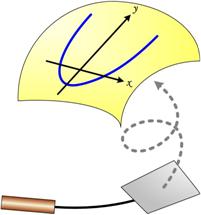 This is a stimulating problem from the UKMT Senior Math Challenge for 2017. The additional problem “for investigation” is particularly challenging. (I have edited the problem slightly for clarity.)
 There is the famous chicken and the egg problem: If a chicken and a half can lay an egg and a half in a day and a half, how many eggs can three chickens lay in three days? Fibonacci 800 years ago in his book Liber Abaci (1202 AD) did not have exactly this problem (as far as I could find), but he posed its equivalent. And most likely the problem came even earlier from the Arabs. So we can essentially claim Fibonacci (or the Arabs) as the father of the chicken and egg problem. Here are three of Fibonacci’s actual problems:
 This is another train puzzle by H. E. Dudeney. This one has some hairy arithmetic.
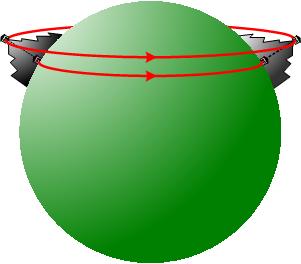 It is always fascinating to look at problems from the past. This one, given by Thomas Whiting himself, is over 200 years old from Whiting’s 1798 Mathematical, Geometrical, and Philosophical Delights:


