
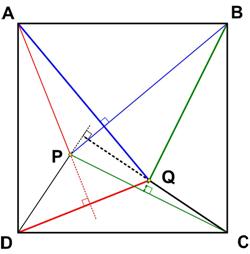
 I found this problem from the Math Challenges section of the 2002 Pi in the Sky Canadian math magazine for high school students to be truly astonishing.
“Problem 4. Inside of the square ABCD, take any point P. Prove that the perpendiculars from A on BP, from B on CP, from C on DP, and from D on AP are concurrent (i.e. they meet at one point).”
How could such a complicated arrangement produce such an amazing result? I didn’t know where to begin to try to prove it. My wandering path to discovery produced one of my most satisfying “aha!” moments.
See the Mysterious Doppelgänger Problem
Update (12/27/2019) I goofed. I had plotted the original figure incorrectly. (No figure was given in the Pi in the Sky statement of the problem.) Fortunately, the original solution idea still worked.
 Here is yet another surprising result from Colin Hughes at Maths Challenge.
 This is another train puzzle by H. E. Dudeney. This one has some hairy arithmetic.
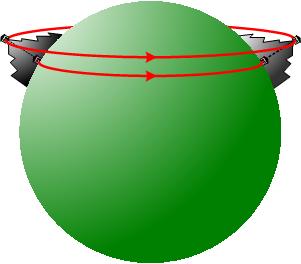 It is always fascinating to look at problems from the past. This one, given by Thomas Whiting himself, is over 200 years old from Whiting’s 1798 Mathematical, Geometrical, and Philosophical Delights:
 This problem from Colin Hughes at Maths Challenge is a most surprising result that takes a bit of tinkering to solve.
 This is another intriguing problem from Presh Talwalkar.
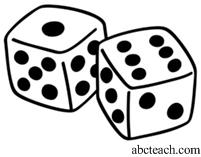 This interesting problem comes from Colin Hughes at the Maths Challenge website.
 A glutton for punishment I considered another Sam Loyd puzzle:
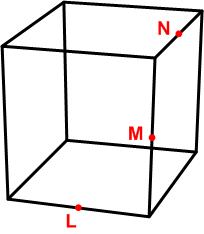 This is from the UKMT Senior Challenge of 2004.
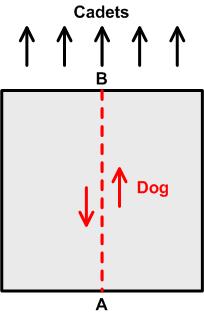 In my search for new problems I came across this one from Martin Gardner:


