
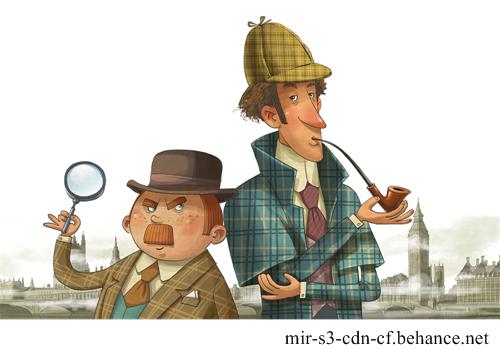
 Ian Stewart has a nice logic problem in his Casebook of Mathematical Mysteries, which includes a pastiche of Sherlock Holmes in the form of Herlock Soames and Dr. Watsup, along with brother Spycraft and nemesis Dr. Mogiarty.
“An important document was accidentally mislaid, and then stolen,” Spycraft said. “It is essential to the security of the British Empire that it be recovered without delay. If it gets into the hands of our enemies, careers will be ruined and parts of the Empire may fall. Fortunately, a local constable caught a glimpse of the thief, enough to narrow it down to precisely one of four men.”
“Petty thieves?”
“No, all four are gentlemen of high repute. Admiral Arbuthnot, Bishop Burlington, Captain Charlesworth, and Doctor Dashingham.”
Soames sat bolt upright. “Mogiarty has a hand in this, then.”
Not following his reasoning, I asked him to explain.
“All four are spies, Watsup. Working for Mogiarty.”
“Then … Spycraft must be engaged in counter-espionage!” I cried.
“Yes.” He glanced at his brother. “But you did not hear that from me.”
“Have these traitors been questioned?” I asked.
Spycraft handed me a dossier, and I read it aloud for Soames’s benefit. “Under interrogation Arbuthnot said ‘Burlington did it.’ Burlington said ‘Arbuthnot is lying.’ Charlesworth said ‘It was not I.’ Dashingham said ‘Arbuthnot did it.’ That is all.”
“Not quite all. We know from another source that exactly one of them was telling the truth.”
“You have an informer in Mogiarty’s inner circle, Spycraft?”
“We had an informer, Hemlock. He was garrotted with his own necktie before he could tell us the actual name. Very sad—it was an Old Etonian tie, totally ruined. However, all is not lost. If we can deduce who was the thief, we can obtain a search warrant and recover the document. All four men are being watched; they will have no opportunity to pass the document to Mogiarty. But our hands are tied; we must stick to the letter of the law. Moreover, if we raid the wrong premises, Mogiarty’s lawyers will publicise the mistake and cause irreparable damage.”
Which man was the thief?
See the Purloined Papers Puzzle for solutions.
 Here is another problem from the Sherlock Holmes puzzle book by Dr. Watson (aka Tim Dedopulos).
 This is a fun logic puzzle from one of Ian Stewart’s many math collections. I discovered that the problem actually is basically one of Lewis Carroll’s examples from an 1896 book:
 Here is a nice logic puzzle from 2014 Futility Closet.
 For a change of pace, here is an early
 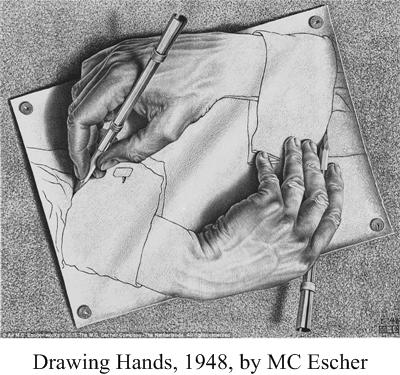 For a number of years I have collected excerpts that portray mathematical ideas in a literary or philosophical setting. I had occasion to read a few of these on the last day of some math classes I was teaching, since there was no point in introducing a new subject before the final exam.
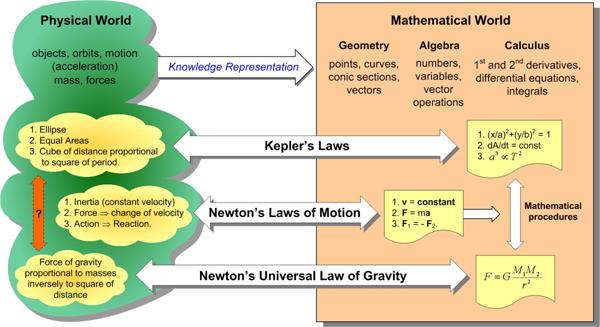 This post continues a meditation on the nature of mathematics begun in Part I. It involves the perennial question about whether mathematics is invented or discovered, and consequently evokes questions about mathematical reality. This subject is probably of little interest to most people, and even most mathematicians. But the extremely heavy involvement of mathematics in the descriptions of quantum mechanics, and the even more mathematically abstruse excursions into ideas such as string theory in an effort to wed quantum mechanics to general relativity, force us to confront the central place mathematics has in “explaining” our physical reality. Of course, this essay has no definitive answers, and leaves the situation as a mystery. See


