
 Here is another problem from the Sherlock Holmes puzzle book by Dr. Watson (aka Tim Dedopulos).
“Wiggins grinned at me. ‘You’ve not played Rock Paper Scissors before, Doctor?’
‘Doesn’t ring a bell,’ I told him.
‘Two of you randomly pick one of the three, and shout your choice simultaneously. There are hand gestures, too. If you both get the same, it’s a draw. Otherwise, scissors beats paper, paper beats rock, and rock beats scissors.’
‘So it’s a way of settling an argument,’ I suggested.
‘You were brought up wrong, Doctor,’ Wiggins said gravely. ‘Look, try it this way. I played a series of ten games with Alice earlier. I picked scissors six times, rock three times, and paper once. She picked scissors four times, rock twice, and paper four times. None of our games were drawn.’ He glanced at Holmes, who nodded. ‘So then, Doctor. What was the overall score for the series?’ ”
See the Rock Paper Scissors Problem for solutions.
(Update 7/29/2021) This problem in a different guise was presented by Futility Closet (7/28/2021) and attributed to Yoshinao Katagiri in Nobuyuki Yoshigahara’s Puzzles 101: A Puzzlemaster’s Challenge, 2004.
 This is a fun logic puzzle from one of Ian Stewart’s many math collections. I discovered that the problem actually is basically one of Lewis Carroll’s examples from an 1896 book:
 Here is a nice logic puzzle from 2014 Futility Closet.
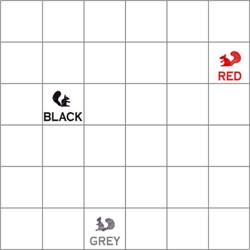 For a change of pace, here is an early
 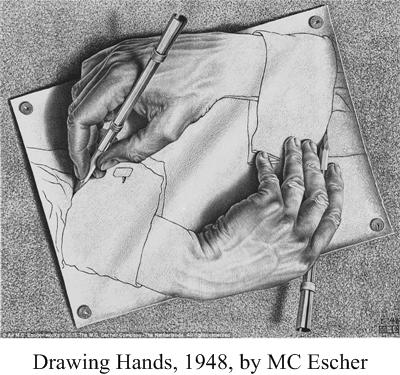 For a number of years I have collected excerpts that portray mathematical ideas in a literary or philosophical setting. I had occasion to read a few of these on the last day of some math classes I was teaching, since there was no point in introducing a new subject before the final exam.
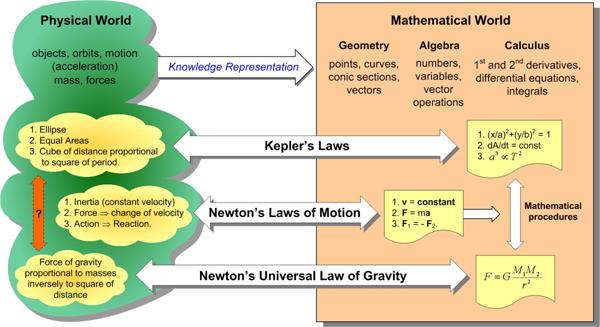 This post continues a meditation on the nature of mathematics begun in Part I. It involves the perennial question about whether mathematics is invented or discovered, and consequently evokes questions about mathematical reality. This subject is probably of little interest to most people, and even most mathematicians. But the extremely heavy involvement of mathematics in the descriptions of quantum mechanics, and the even more mathematically abstruse excursions into ideas such as string theory in an effort to wed quantum mechanics to general relativity, force us to confront the central place mathematics has in “explaining” our physical reality. Of course, this essay has no definitive answers, and leaves the situation as a mystery. See


