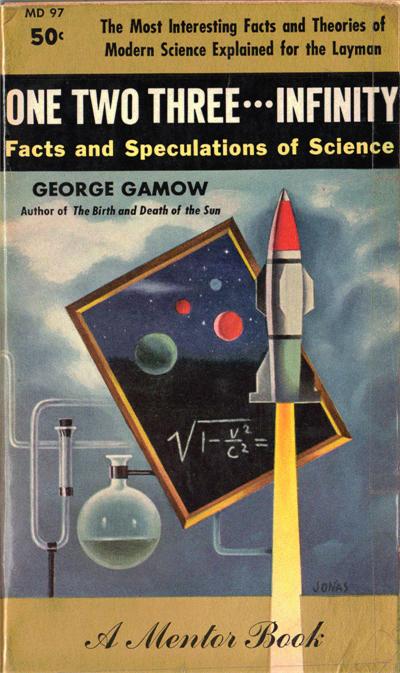
 I am a regular reader of Ash Jogalekar’s blog Curious Wavefunction, but I found my way to his latest via the eclectic website 3 Quarks Daily, also highly recommended. I could not resist the title, “Mathematics, And The Excellence Of The Life It Brings”. The entirety of the post was about the mathematician Shing-Tung Yau’s recent memoir, The Shape of a Life, but Jogalekar’s introductory remarks about his personal involvement with mathematics stirred so many personal recollections of my own, that I thought I would provide an excerpt, followed by my own comments. Furthermore, he also addresses in passing the perennial question of whether math is invented or discovered.
See Math and the Excellence of Life
(Update 8/9/2021) Jogalekar’s story about his embracing math and the effect Simmon’s topology book had on him is even more amazing than I thought. Throughout his younger years he had always been labeled “bad at math” and did poorly in school. But a teacher and Simmon’s book changed all that. He explains in a recent article in 3QuarksDaily, which I also provide here.
I can’t help singling out a section where he, too, extols the significance and importance of high school geometry (see my post “Down with Geometry”):
“… Purely through accident at this time, I had gotten my hands on a book on topology, a subject that I had become mildly interested in because of its deep connections to geometry; interestingly, while I was rather abysmal at algebra in school, I always did well with geometry because I was good at visualization. …
The topology book and the professor completely changed my outlook and saved me. I started doing well and tackling advanced topics and started to love math. I also got interested in physics and did well. Most importantly, I started appreciating the beauty of math. Over time I found that people interested in mathematics are generally of two kinds, although there’s some overlap: there are those who really enjoy mathematical puzzles and puzzle-like problems, relishing the raw process of problem-solving. Then there are others who simply enjoy the abstract nature of proofs and the connections between different topics: I am definitely part of this second group. In fact, another revelation I had was that most of the high school curriculum needed the students to be good at the former skill and had no appreciation of the latter, thus simply weeding out students like myself who wanted to understand the big picture and see the connections rather than just become adept at problem-solving.”
I confess I share this view and find it somewhat ironic that my website has devolved into a problem-solving source. I have tried to show the wider picture of fascinating connections, but that often takes more skill and time than I currently possess.

 One of the physics blogs I enjoy reading is by the mathematical physicist Peter Woit, called Not Even Wrong. A recent post provided a tantalizing teaser:
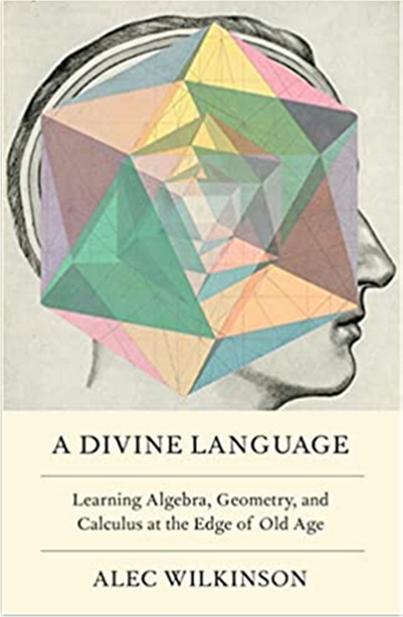 I have just finished reading a most remarkable book by Alec Wilkinson, called A Divine Language: Learning Algebra, Geometry, and Calculus at the Edge of Old Age. I had read an
 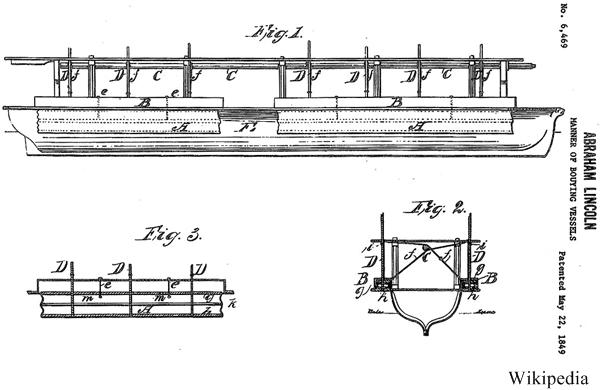 I thought there was nothing new we could learn about Abraham Lincoln, but I see I was quite mistaken after reading Sidney Blumenthal’s
 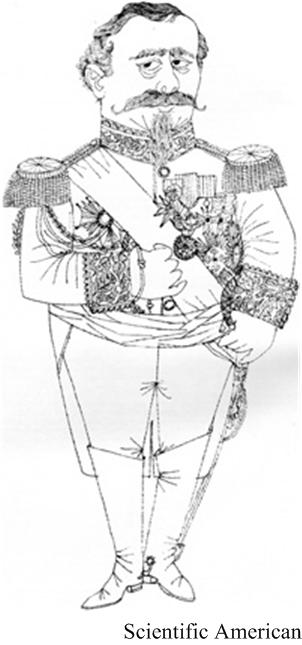 I thought it would be interesting to present a recent entry in the mathematician John Baez’s Diary on some extremes in mathematics from the Bourbaki school, namely, how many symbols it would take to define the number “1.”
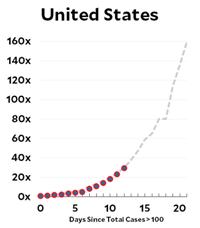 Given the mathematical nature of this website I feel reluctantly impelled to address the coronavirus pandemic. The mathematics behind the spread of infection is basically the same exponential growth that I discussed in the “
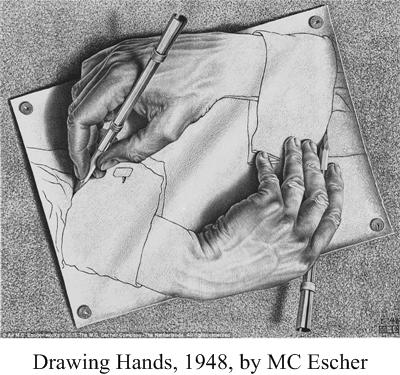 For a number of years I have collected excerpts that portray mathematical ideas in a literary or philosophical setting. I had occasion to read a few of these on the last day of some math classes I was teaching, since there was no point in introducing a new subject before the final exam.
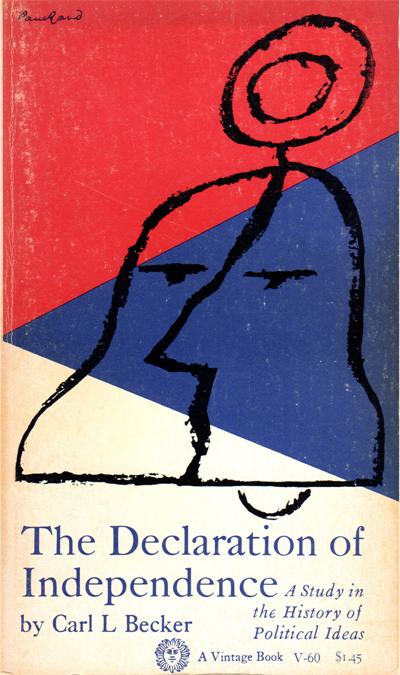 One of the books that has stuck with me over the years is Carl Becker’s The Declaration of Independence (1922, reprint 1942), not only for its incredibly clear and beautiful writing but also for its emphasis on the impact of the revolution most prominently caused by Isaac Newton, which was later subsumed under the term Scientific Revolution covering the entire 17th century. A consequence of this remarkable period was the so-called Enlightenment that followed in the 18th century and became the soil from which our nation’s founding ideas and documents sprang. Both these centuries have been further optimistically called the Age of Reason.
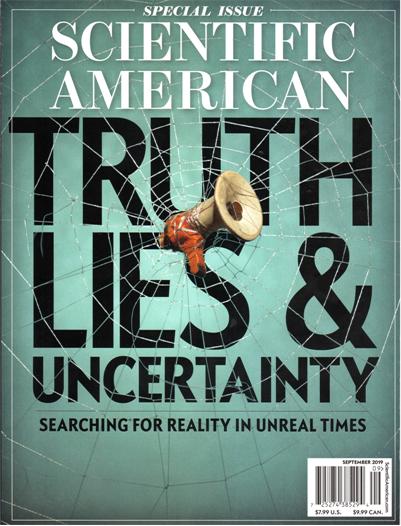 The September 2019 Special Issue of Scientific American is a must read. Unfortunately it is behind a paywall, so you should purchase a copy at a store or digitally online. All the articles are fascinating and relevant, and address basic questions of epistemology—how do we know what we know? The first section, “Truth”, is the most pertinent to my thinking, as it covers three subjects I have been pondering for years.
 This is a great